


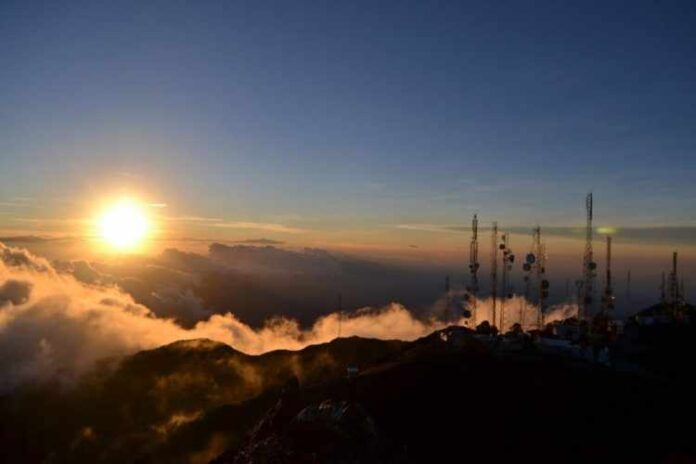
Panama National Park – Volcan Baru National Park
Fun Facts About Volcan Baru National Park & How YOU Can Reach The Summit
Established in 1976, Volcan Baru National Park is one of the most special National Parks Panama has to offer. If you are staying in Boquete, the Baru Volcano is certainly worth a visit.
What’s so special about Volcan Baru you ask?
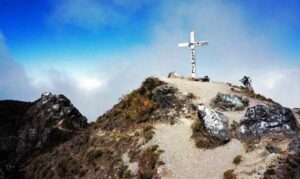
Well for starters it’s the highest peak in Panama. The views from its 3,478 meter (over 11,400 feet) vantage point are out of this world! Barú Volcano National Park extends across 14,300 hectares (35,336 acres) in total. From its highest peaks the ocean views and cloud forests fan out in all directions below, and on a very clear day it’s possible to see the both the Pacific Ocean and the Caribbean Sea without moving even one step. Oh, and did we mention, Baru is technically still an active volcano? Yes, it’s very special indeed.
Volcan Baru National Park is quite well known, so of course a lot of people want to do the hike to the summit. In fact, the hiking in general is fabulous all over the national park and the region … not just straight to the top. But where Panama National Parks are concerned, this one is also a mecca for bird nerds! The Chiriqui highlands is one of the few places in the world where you will find the Resplendent Quetzales. And wildlife? There are five species of the majestic big cats here. Not to worry. The big cats want to see you much less than you want to see them.
Part of the Talamanca range that extends into Costa Rica, Volcán Barú is surrounded by fertile and cool highlands with the Chiriquí Viejo and Caldera rivers flowing throughout. The towns of Volcán and Cerro Punta are on the western side, with Boquete representing the eastern side. There’s no shortage of incredible vistas, and trails from which to partake of them.
What is the weather like at the Baru Volcano National Park?
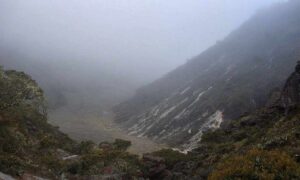
The climate around Volcan Baru contains a range of ecosystems, including humid montane forests, low humid montane forests, and plain old montane rainforests. What does this mean? More or less this is a cloud forest region.
In the higher elevations you’ll the encounter the cloud forest which you can always expect to be cooler. Generally, the mornings are best time for bird watching and other wildlife-specific excursions. During the rainy season months of July-October, you’d be wise to always book your outings in the morning. Conditions are never really optimal in the afternoon hours, but that goes double during rainy season.
Average temperatures in the park vary between 10°C (50°F) and 20°C (68°F), but conditions change a lot depending on elevation and precipitation. The summit can be as cold as 0°C (32°F) and you can even find frost up there in the summer months.
What kind of wildlife can I expect to find at the Volcan Baru National Park?
The variety of flora and fauna surrounding Volcan Baru National park is outstanding.
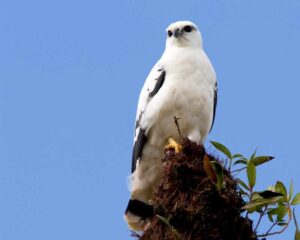
Bird lovers flock here to seek out the more than 220 bird species native to the area. In fact, over 250 species of birds in total have been identified within the national park. The most famous of which is the elusive Resplendent Quetzal. But don’t waste your entire day searching for Quetzales. Look out for some of the more commonly seen species such as; Black Guan, Black-thighed Grosbeak, Black and White Hawk-eagle, Wrenthrush, Yellow-thighed Finch, Toucans and a variety of Tanigers. Oh, and let’s not forget about the aptly named Volcano Junco & Volcano Hummingbirds, just to name a few. We are not kidding when we say birding opportunities abound here in Volcan Baru National Park!
And animals? If you like big cats, you will pleased to hear Panama is also known as home of the Jaguar. In fact, five of Central America’s six big cat breeds can also be found here: jaguar, puma, ocelot, jaguarundi, and margay. Wow!
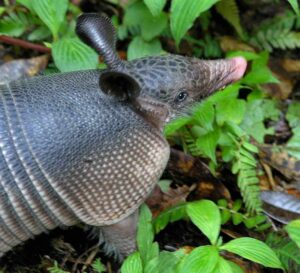
In regards to wildlife that you would not mind crossing your path, be on the lookout for the mischievous coatimundi, part of the raccoon family that tend to not shy from humans. You can occasionally spot an armadillo or tapir using the same hiking trails you do. If you look closely, you will spot beautifully colored frogs, glass winged butterflies, and maybe even a snake. Up in the trees, you can spot sloths & monkeys. Loads and loads of monkeys my friend. And trust us, you will not have trouble hearing them. Howler monkeys can be heard several miles away.
What about hiking in Volcan Baru National Park?
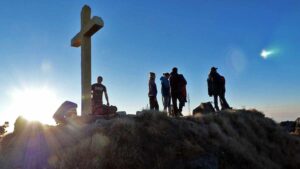
Aside from the summit, there are a ton of different hiking trails in and around the national park. Most are easily accessed from Boquete from the east or Cerro Punta from the west. There are many guided day hikes departing from Boquete that are quite affordable. Most importantly, hiking with an experienced naturalist guide really helps your chances of spotting wildlife.
Baru Volcan National Park’s most popular hiking trail is definitely the Sendero Los Quetzales, usually just called the Los Quetzales Trail. This trail connects Boquete and Cerro Punta by wrapping around the side of the volcano. The full Quetzal trail takes around 6 hours to hike, and it is recommended that you be in relatively good shape for it. If you are already a hiker, this should be a moderate challenge for you.
A less strenuous walk that might appeal to you is the Bajo Mono Loop. This is a 20-kilometer (12.5-mi) paved loop that starts and ends just north of Boquete. Offering panoramic views of the Boquete Valley from above, you’ll pass through dense forests on a nice, even surface. Take care though! Cars share this road.
Other trails include the Pipeline Trail, Culebra and Lost Waterfalls, each itinerary offering something different.
And the summit of Volcan Baru? What is the best way to reach the top?
There are 2 ways to reach the summit, hiking or 4×4 vehicle. Here at The Real Deal Tours, honestly we really love the hike to Baru summit. There is nothing quite like the feeling you get when reaching the top after really working for it…and timing it to coincide with the sunrise is an experience you’ll never forget. We recommend joining an excursion like this one where you’ll have a group and a guide to travel with through all those picturesque forests and valleys, bathed in moonlight. You’ll hike straight through the night, arriving at the summit to greet the rising sun and a brand new day.
Hiking: Hiking to the summit of Barú Volcano is the super popular activity, although it is worth mentioning that this hike is no joke. There is a reason they made the Baru Volcano jeep tour: to make the pain stop. It’s a straight uphill shot for 13.5 kilometers (8.5 mi), and usually takes even the most experienced hikers around 5-6 hours to reach the summit.
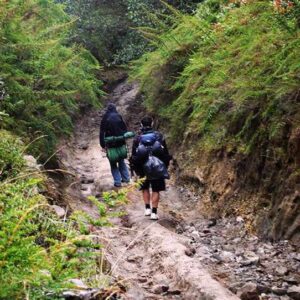
Along the way, the scenery is to die for. Shady forests, wide meadows, expansive views that will leave you breathless. On a clear day you can see the Pacific and the Caribbean, and you’ll be blown away. The hike down takes a little less time of course, 4+ hours, but is difficult as well. Bring lots of food and water. Even if you’re pretty experienced, guides are highly recommended for this hike.
4×4 Vehicle: Considered one of the most challenging terrains in Central America, the road leading to the summit of Baru is no joke. You really should be a very experienced off-road driver to try to navigate the terrain on your own. But for those up for the challenge, it is one heck of a wild ride! And the best part? You do not have to hike for 10 hours, you can leave just a couple hours prior to sunrise!
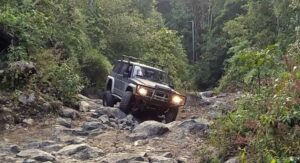
If you have been interested in the hike to Baru summit but your research is suggesting that some of the other trails might suit you better, consider taking the Volcan Baru jeep tour. This will get you to the summit of the volcano on a road that is paved, yes, but still quite a white knuckle ride thanks to how narrow it is. So, still plenty of adventure, plus you’ve saved your legs for another beautiful trail in the park.
What should I bring with me if I plan to hike to the summit?
Generally speaking clothing-wise you’ll want warm layers, sturdy and comfortable walking shoes that you don’t mind getting wet, and a waterproof jacket. Carry at least 2 liters of water with you, and some snacks for the trail. If you plan to stay the night you’ll need to decide what to do about a tent, sleeping bag and food. One option is to just hire a local guide who can handle all of this for you.
Where should I stay if I want to visit the Baru Volcano National Park?
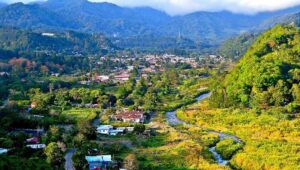
One of the really neat things about Baru National Park is its proximity to Boquete, one of the most popular destinations in all of Panama. With the park’s dense forests, diverse wildlife, trails and rivers, you really can step away for just a day from the hustle and bustle of the city. In fact, Boquete is considered the adventure capital of Panama. There are so many fun things to do in Boquete you can easily spend a week exploring. And the festivals, Boquete is famous for the Jazz Fest, Flower Fest, and a world-renown Orchid Expo. Only in Boquete can you photograph the elusive Resplendent Quetzal in the morning, and enjoy dinner and dancing to live music in the evening.
So, does the Volcan Baru sound amazing to you? Then go for it!
The National Park includes several other hiking trails aside from the summit hike to Baru. This post focuses mostly on reaching the Volcan Baru summit. Check back in a couple of days and we will post more information on some of the best hiking trails in Boquete.
This is for the National Park or Volcan
Great catch thank you! We have updated the pic for you.
That crater pic is not Panama.