


Panama Ngäbe-Buglé Indigenous People
Panama is a land of beautiful landscapes and beautiful people, a land of rich culture and ancestral wisdom. Panama is home to 7 different indigenous groups, among which we find the Ngäbe-Buglé Indigenous People of Panama. Like other Panama Indigenous groups, the Ngäbe-Buglé (which is supposed to be the correct spelling form and closest to their linguistics rather than Ngöbe-Buglé as appears in some texts) survived over the centuries escaping the Spanish Conquest by retrieving into isolated areas within the Central Mountain Chain, or Cordillera Central, found in the North part of the country towards the Caribbean coast, where their ancestral lands had always been. Today Panama’s Ngäbe-Buglé people, which are the most numerous indigenous group in the country, are making their way back to mainstream society to some extent. If you travel to Panama you could almost be sure you’ll see some Ngäbe and Buglé women wearing their colorful dresses, called naguas, and selling some of their crafts, like their well-known beaded necklaces and jewelry, called chaquiras, and hand-made bags or chacarás. And so, after centuries of struggle, the Ngäbe-Buglé people face an even greater challenge today: finding a way to live in modern society without losing their unique culture. Sustainable tourism could be the answer they’ve been waiting for.
Panama’s Ngäbe-Buglé People: Historical Fighters
The Ngäbe-Buglé People of Panama are not only the most ancient indigenous group of the Isthmus, but they were also the most fearless indigenous group the Spanish conquerors came across! The Ngäbe-Buglé people were some of the few groups who stood to the Conquest and defied the Spanish. One of their leaders, Cacique Urracá, became a true legend among the natives and a complete nightmare for the Spanish, defeating them successfully for 9 years! Urracá’s fight became so important that the face of this legendary Indian rebel is still found nowadays featured on the smallest denomination centesimo coin in Panama. Nonetheless, as history shows, the Spanish won against the people of the New World and the Ngäbe-Buglé tribes, just like other tribes, were made to make their way out of their land into the mountains where they were able to safeguard and protect their pre-Columbian traditions and ways of life from the Spanish and later from the world as Panama joined modernity.
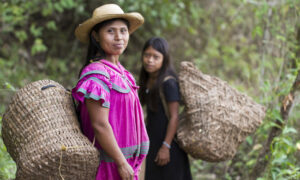 Originally the Ngäbe-Buglés were two separate indigenous groups of Western Panama, the Guaymí or Ngäbe and the Bokota or Buglé. The Ngäbe speak Ngäbere and the Buglé speak Buglére, both members of the Chibchan language family. The languages of the Kuna, Bribri and Naso (Teribe) indigenous groups also come from the Chibchan language family. The Ngäbe and the Buglé collectively represent Panama’s largest indigenous group with 200,000 people. Together they share the territory known as Comarca Ngäbe-Buglé, which is kind of a “native reserve”, created in 1997 with lands from the provinces of Bocas del Toro, Chiriquí and Veraguas after historical fighting from these groups claiming their ancestral right to the land and its resources. The Cerro Colorado copper deposit, one of the largest deposits of copper ore in the world, is located at the Comarca Ngäbe-Buglé; the excessive exploitation of this mineral and other resources pushed the Ngäbe-Buglé people to fight in recent past against Panama’s authorities, which actually hit the news and became a big campaign against the violation of human rights.
The Ngäbe-Buglés possess a cultural richness beyond our “Westernized” understanding of the world around us. The Ngäbe-Buglé people have a profound love to their ancestors; they are brave, loyal and mystical. They love their land and their customs. While some are only now slowly assimilating into modern society, they would give their life away for staying true to their traditions as Ngäbe-Buglés.
Sustainable Tourism: An Answer Worth Trying
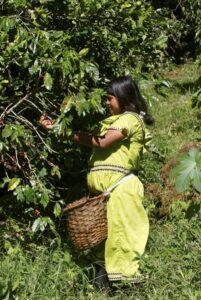 Traditionally subsistence farmers, hunters and gatherers, the Ngäbe-Buglés are starting to make their way back to mainstream society to some extent. Nowadays their means for survival are limited and their traditional ways of sustaining their families is becoming harder and harder. Ngäbe-Buglé men have to look for temporary jobs at coffee plantations or embark to the city in the hope to earn some money. Ngäbe-Buglé women, as mentioned before, sell their traditional handcrafts to tourists to help out. Yet, some Ngäbe-Buglé communities are exploring a new approach for subsistence: community-based tourism. Sustainable tourism might represent the answer for these indigenous groups that do not want to give up their ancestral ways of life and still make a living for their families and communities.
Ngäbe communities like Soloy, located in the foothills of the Central Cordillera and an important access point to more remote areas of the Comarca Ngäbe-Buglé, as well as others are joining this community-based tourism effort offering nature and cultural activities for visitors to boost their economy. From adventure hikes, to whitewater river rafting, to traditional Ngäbe food and learning from the community elders about their mystical beliefs of how the world was created and the Ngäbe came to exist, a visit to these communities is becoming a new trend in tourism with a bright future and a warm heart. These sustainable tourism practices not only represent a strong niche for Panama’s expanding tourism industry but a way for Panama and the world to preserve the essence of these indigenous communities, which should NOT disappear or future generations will miss out.
Indigenous groups in Panama are finding a way to co-exist with the modern world through community-based tourism and tourists from all world corners have the opportunity to experience something completely different to anything offered by the modern world. A true cultural experience waits for you in Panama!
Hello, so I’m travelling to Panamá in a few days and I’m trying to find some less turistic things to do and I was quite interested to see the indigenous people from Panamá in a more real way. But the thing is: I really can not find anything online to book. And , for what i was reading online , you can also find some comunities in the are of Bocas del Toro, is it in the islands? Because for what I read the islands are always full of tourists who just want to party. What is your advice? Where and how should I go? Thank you
Hola Juliana,
From Panama City, you will be close to the Emberra & Wounaan indigenous groups. You can visit either on a one day tour, but between the two groups, I find the one visited on the combo tour the most authentic. https://www.thepanamatoursite.com/Panama_City/tours/Monkey-Island-and-Indian-Village-Combo-Tour.php We can also arrange a private tour for a more intimate experience. In regards to the islands, I think you are confusing Bocas del Toro with San Blas Islands. Bocas del Toro is a bit of a party town, San Blas is controlled by the indigenous Guna Yala people. You can visit on a one day tour as well from Panama City, but we recommend an overnight trip if you have the time and do not remind being very remote with little amenities and creature comforts. You can find more info on both options here https://www.thepanamatoursite.com/San_Blas_Islands/San_Blas_Tours.php You can contact our CS team at info@thePanamaTourSite.com for more information.
Good day, my name is Kamell Ellis and I am a consultant with The Jacobs Agency and the “Ultimate Soul Escape” group travel event. We are hosting an event at the Dreams Resort in Panama from July 21-25, 2023.
During our trip, we would like to make a donation of school supplies to the indigenous children of Panama.
Might this be an effort that someone from the Real Deal Team can assist us in facilitating?
We are already scheduled to do a school supplies giveaway with the St. Maria De Belen School in the city of Colon, Panama. However, we also wanted to include indigenous children in our efforts while in Panama.
Please advise if this is something that you can be of assistance with. Thank you for your consideration and attention to this matter.
Hola Kamell,
Thank you for reaching out to us and offering the school donations. That is really wonderful and appreciated. Can you please contact management via email info@therealdealtours.com with your information and we will connect you with a local guide there that can find the best option for a community that could use the assistance.
We look forward to hearing from you.